Hispanas Unidas Presents “Dos Marías”
Last night, the Performing Arts Theater at Palo Alto College was transformed into a space of cultural pride, intergenerational connection, and political reflection. This transformation happened during a sold-out event presented by Hispanas Unidas. Titled “Dos Marías: A Conversation on Friendship, Activism, & Leadership Lessons for Latina Leaders,”, the gathering honored the impact of Hispanas Unidas’ Dos Marías. It also honored two extraordinary women—María Antonietta Berriozábal and María del Rosario “Rosie” Castro. Their decades of activism and public service have shaped civic leadership for Latinas in South Texas and beyond.
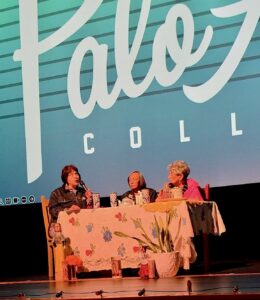
The stage was intentionally designed to resemble an abuela’s kitchen table, a powerful symbol of heritage, community, and deep conversation. This intimate setting framed a heartfelt dialogue between two longtime friends. Their shared history spans more than 50 years of work for justice, equity, and community empowerment. Stories of struggle and triumph were shared with warmth and humor. As a result, the audience felt less like attendees at a formal lecture, and more like family gathered over cafecito.
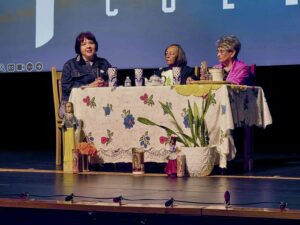
María Antonietta Berriozábal, a daughter of Mexican immigrants and lifelong San Antonio resident, made history in 1981 as the first Hispanic woman elected to the San Antonio City Council. She served District 1 for a decade. Her election marked a breakthrough in local government and expanded the possibilities for Latina leadership in municipal politics. In her opening remarks, Berriozábal reflected on the collective effort behind her achievements. She shared that she stands on the shoulders of those who came before her, while emphasizing the responsibility to uplift future generations. In addition, her career has included international representation, such as service with the Inter-American Commission on Women. She also participated in the United Nations Fourth World Conference on Women. She has also spent decades in community leadership, amplifying Latina voices.
Rosie Castro, a civil rights activist, educator, poet, and community organizer, brought her own powerful narrative to the conversation. She was raised in San Antonio’s barrios, and her worldview was shaped early by witnessing economic and racial inequities. She became a foundational figure in the Mexican American Youth Organization and the Raza Unida Party. Also, she spoke movingly about her mother’s sacrifices—working as a housekeeper and teaching herself to read and write in both English and Spanish. Those early lessons, Castro shared, fueled her lifelong belief in education and civic participation. Her historic 1971 run for the San Antonio City Council happened during an era of at-large elections. These elections made it nearly impossible for Mexican-American candidates to win. Nonetheless, it helped lay the groundwork for future Latina leaders.

During the moderated conversation, both women offered candid reflections on leadership and accountability. These reflections resonated deeply with the audience of young leaders, activists, and allies. Berriozábal underscored the importance of civic responsibility, reminding the room that elected officials must be held accountable by the people they serve. Castro emphasized the necessity of remaining rooted in the community. She noted that leaders who are not present before an election rarely become present after taking office. A particularly memorable moment came when Castro shared the story behind her iconic red purse. The purse is a symbol of solidarity with Mexican American businesswomen fighting for equal pay, and it is a lifelong reminder of being in the red.” It represents both struggle and strength.
Family presence added warmth and intimacy to the evening. Berriozábal expressed gratitude to her sisters and honored loved ones who have passed. She also asked for prayers for her husband, who was unable to attend due to illness. Castro was joined by her family, including her sons, Julian Castro and Joaquin Castro, and their families. A short film screened during the program captured a tender moment. One of Castro’s granddaughters excitedly exclaimed, “That’s grandma!” upon seeing Rosie on screen. This drew laughter and applause from the audience.
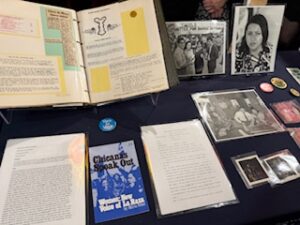
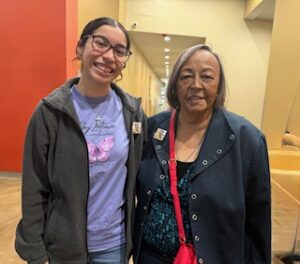
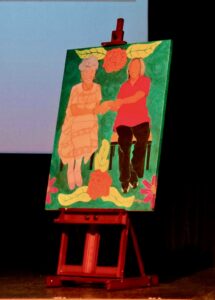
Every element of the evening reflected cultural pride and community care. A youth mariachi band welcomed guests, and dishes celebrating Mexican heritage were catered. The kitchen-table stage evoked nostalgia and a sense of connection. In addition, local artist Terry Ibanez unveiled a portrait honoring both women as a lasting tribute to their legacy.
“Dos Marías” was more than an event; it was a living testament to the power of storytelling, representation, and intergenerational learning. From the barrio to City Hall, the lives of María Antonietta Berriozábal and Rosie Castro remind us that the fight for equity is rooted in courage, community, and shared commitment. Their legacy is not only the history of San Antonio, but a guiding light for its future.